


A Polish national who claimed to be the missing girl "pursued that myth" and harassed the missing girl's parents by dispatching electronic messages, making phone calls and turning up at their residence, a court has heard.
The first defendant and the second defendant conducted a "campaign of harassment", the court was informed, and in Ms Wandelt's case, that occurred over two and a half years.
On Monday, jurors were told Ms Wandelt repeatedly claimed she was Madeleine and was abducted and taken to the European nation.
The first accused and the second accused each deny a count of stalking resulting in significant distress and anxiety to Madeleine's parents between mid-2022 and early this year.

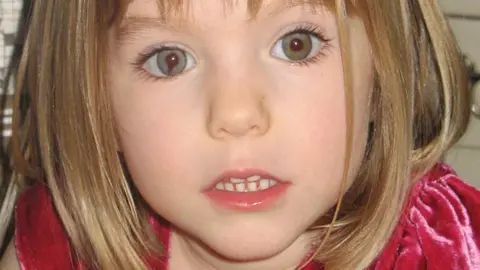
The child's vanishing in the year 2007 - at the age of three during a family holiday in the European country - is among the most extensively covered child disappearance incidents and continues unresolved.
Legal counsel also spoke of the global attention that the disappearance had directed toward the parents.
"One of many tragic consequences for Madeleine's parents has been their constant inability to avoid the spotlight of publicity that came with that incident.
"The focus they have experienced has sometimes lacked sympathetic, at times far from it.
"There remains a group of individuals who persist in refusing to acknowledge their plight and spread conspiracy theories.
"Regrettably, these accused individuals belong to that latter group."
Increasing Actions
Testimony revealed from mid-2022, the defendant had begun to speak to "any willing listener" that she was Madeleine.
The prosecutor said that, in early 2023, the accused was in communication with a organization in Poland created to help with historic missing persons cases and provide assistance and guidance to people seeking those who had gone missing.
According to the prosecutor, the defendant first claimed she was the disappeared child from Germany.
But after these assertions were ruled out by the organization, the accused then contacted the group with a conviction she could be Acacia Bishop - a missing baby from the American state in the United States - before contacting them about her insistence she was Madeleine McCann.
'Failed to Stop'
Her belief progressed to an attempt to call the medical facility where both the McCanns were employed.
A lengthy telephone conversation to the reception resulted in a notification from the health service representative to Operation Grange, the UK inquiry into the vanishing.
Court proceedings revealed the defendant made additional efforts to reach out to officials and then Mr McCann directly via email in June 2023.
In a message, she stated: "It's possible I am your child, it's possible I am the missing girl."
She added people were "trying to cover up the story" and claimed there were similarities between her and the child, including having marks in the same places.
But her efforts went unanswered, which court officials said "did not deter" the defendant - who then made communication with Madeleine's younger sister Amelie via online platforms.
Informing her she was her "sole chance", she transmitted altered photographs to show they were "somehow related" and claimed to have memories of events prior to disappearance, the trial was told.
These claims, the proceedings revealed, were restated in 2024 when the defendant is accused of "consistently" contacted Mrs McCann's cell phone over the course of a day - calling her "mother", claiming to recall feeding Madeleine's younger brother Sean, of engaging in children's games in the rear yard of the family's home in Rothley, the English county, and of the evening the disappearance occurred.
In a communication, she said: "I recall you visited my bedroom before the incident, touched my hair and said 'I care for you and I will find you'."
The trial of Ms Wendalt, of Jana Kochanowskiego in the Polish city, the country, and Ms Spragg, of Caerau Court Road in Cardiff, continues.


